If you ask any literary buff about Pablo Neruda, Isabel Allende, and Roberto Bolaño, they will surely know about these literary giants. But if you asked them which country these writers belong to, they might start scratching their heads.
This is very much in contrast to other countries in Latin America. In many Latin countries, one writer becomes the identity of the country. You hear of Gabriel García Márquez, and Colombia comes to mind.
Someone mentions Mario Vargas Llosa, and Peru comes to mind. You hear of Paulo Coelho, and Brazil comes to mind. And so on.
Chile doesn’t have a single, unifying writer. I think it is probably because Chilean authors stretch across genres. That variety means no single author can stand in for the whole picture.
Yes, we can associate Pablo Neruda with poetry.
But we can’t associate many Chilean books and authors like Isabel Allende and Roberto Bolaño with specific genres. This, again, is in contrast to Gabriel García Márquez’s magical realism and Mario Vargas Llosa’s political fiction.
So, this post celebrates the Chilean writers and best books on Chile, some you may not have heard of.
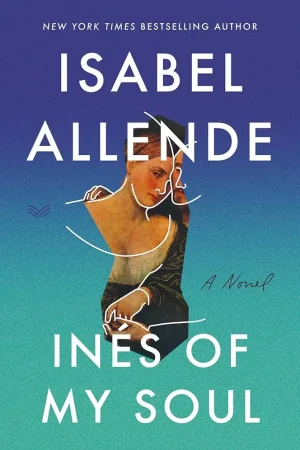
1. Inés of My Soul by Isabel Allende - 4/5
Isabel Allende is one of the most prominent Spanish-language writers from Latin America. She was born in Peru and grew up in Chile. She is one of the only two Latin American writers, alongside Junot Díaz, to be inducted into the American Academy of Arts and Letters. Because so many people know her famous Chilean books, like House of the Spirits and Paula, I decided to take a lesser-known one.
Inés Suárez is a poor seamstress living in 16th-century Spain with little hope for a better future. When her husband disappears to the New World, she seizes the chance to escape her hard life and follows him to the Americas.
After arriving in Peru and learning of his death, she meets Pedro de Valdivia, a military leader. Inés, in a romantic relationship, joins Valdivia on his ambitious mission to conquer and colonize Chile.
They faced hunger, rebellion, and fierce resistance from indigenous groups during their brutal campaign south. They eventually established Santiago in 1541, only to face immediate attack by Indigenous Mapuche forces led by Chief Michimalonko.
Inés controversially defends the city. As the war with the Mapuche intensifies, Inés and Valdivia must confront the cost of conquest and ambition. Since this is historical fiction, you can check out more historical fiction books.
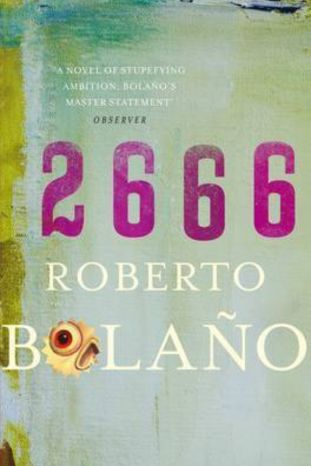
2. 2666 by Roberto Bolaño - 4.2/5
Roberto Bolaño was a Chilean novelist, poet, and short story writer with unconventional narratives. Though he spent much of his adult life in Mexico and Spain, his work is mostly about political unrest, crime, and identity. 2666 is one of his best Chilean books, published posthumously.
The novel is divided into five parts, each with its own characters. It starts with a group of European literary critics searching for a mysterious German author, Benno von Archimboldi. Their search takes them to Santa Teresa, a fictional Mexican city near the U.S. border.
As the story develops, new characters come up, like an American reporter, a Chilean philosophy professor, and a local detective. So basically, most of the novel is about the disturbing pattern of unsolved women’s murders in Santa Teresa.
The final section tells the life story of Archimboldi, beginning in Nazi-era Germany. Slowly, the novel begins to connect his story with the others. Although you may feel that the structure is fragmented, each part builds up to a violence and a human obsession.
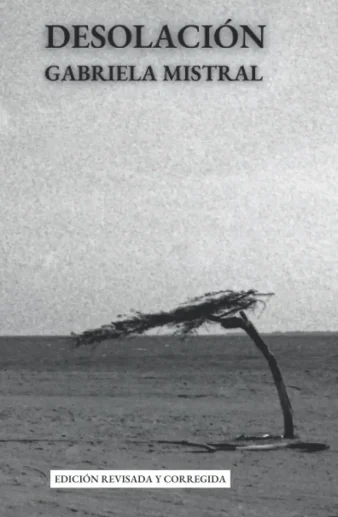
3. Desolation by Gabriela Mistral - 4/5
Gabriela Mistral was a Chilean poet and diplomat. Her diplomatic work often intersected with her literary and educational missions. She was the first Latin American author to receive a Nobel Prize in Literature.
Desolation was her first poetry collection and a deeply personal one. She wrote the poems during intense grief, after the death of her first love. So, there’s poetry about pain, loneliness, spiritual struggle, and a longing for meaning.
Motherhood and childhood are also her major themes. In poems like “The Teacher’s Prayer,” she reflects on her identity as an educator and moral guide. “Piececitos” is about poor children and blends empathy with quiet protest. She remains one of the greatest authors from Chile whose work continues to inspire.
Here’s the last stanza from her poem, “Tres árboles” (Three Trees).
The woodsman forgot them. The night
Will come. I will be with them.
In my heart I will receive their gentle
Sap. They will be like fire to me.
And may the day find us
Quietly embraced in a heap of sorrow
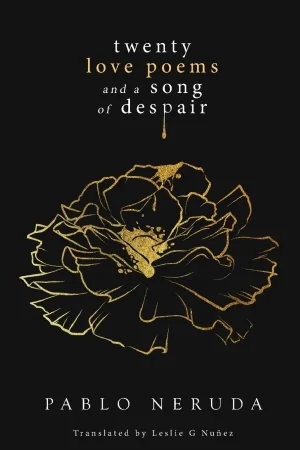
4. Twenty Love Poems and a Song of Despair by Pablo Neruda - 4.2/5
Pablo Neruda was also a poet-diplomat, just like Gabriela Mistral, who later became a politician. He is the national poet of Chile and won the 1971 Nobel Prize in Literature. He is widely considered to be one of the greatest 20th-century poets. There’s also an interesting movie about him.
Twenty Love Poems and a Song of Despair is one of his greatest Chilean works, written at the tender age of 19. The poetry captures the intensity of young love, blending sensuality, nostalgia, and emotional conflict.
Neruda writes in free verse, using natural metaphors like oceans, forests, night skies, for desire and separation. “Body of a Woman” and “Tonight I Can Write (the Saddest Lines)” are two notable poems for their raw intimacy.
The final piece, “The Song of Despair,” breaks away from the structure of the 20 poems and has more reflective poetry. It captures the emptiness and emotional wreckage left behind by intense love.
Since Pablo wrote poetry in Spanish, you can also learn Spanish to enjoy poetry more intimately. Here are some verses from, Here I Love You.
The snow unfurls in dancing figures.
A silver gull slips down from the west.
Sometimes a sail. High, high stars.
Oh the black cross of a ship.
Alone.
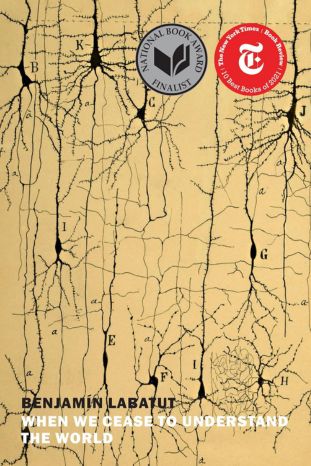
5. When We Cease to Understand the World by Benjamín Labatut - 4.1/5
Benjamín Labatut is one of the famous Chilean authors who was born in Rotterdam, Netherlands. He moved to Santiago at the age of 14. The MANIAC and When We Cease to Understand the World are some of his famous books from Chile. The latter was also shortlisted for the Man Booker prize.
This book blurs the line between fiction and non-fiction. It covers scientists and mathematicians whose discoveries reshaped the 20th century.
The first chapter covers Fritz Haber, a Nobel Prize–winning chemist whose invention of synthetic fertilizer saved millions but also led to the development of chemical weapons for wars.
Another chapter is about Werner Heisenberg and Erwin Schrödinger, pioneers of quantum mechanics, whose radical theories brought scientific revolutions. However, they both dealt with deep personal conflict.
There’s also a chapter on mathematician Alexander Grothendieck, who withdrew completely from public life after redefining modern math. Shinichi Mochizuki, a mathematician whose controversial work even defies peer review.
So, a crazy book from one of the famous Chilean authors that you should read. I also covered this famous Chilean book in the best global novels, some time ago.
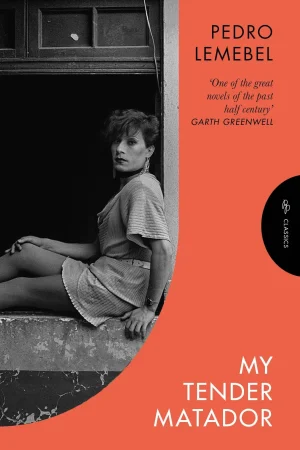
6. My Tender Matador by Pedro Lemebel - 4.5/5
Pedro Lemebel was a Chilean writer, performance artist, and openly gay political activist. He was famous for his bold voice and sharp social commentary. Some of his best books on Chile are about gender, sexuality, and class in Chilean society. My Tender Matador is his only work of fiction.
The novel takes place during the brutal dictatorship of General Augusto Pinochet. The main character doesn’t have a name, but a nickname, the Queen of the Corner. She lives in poverty and dreams of romantic love and freedom.
She becomes involved with Carlos, a handsome university student who is secretly a member of the Manuel Rodríguez Patriotic Front. It is a leftist group planning an attack against the regime.
Carlos begins using the Queen’s home to store weapons and meet with comrades. The Queen, aware but willfully naive, falls in love with him and becomes emotionally invested in his revolutionary cause.
All of this happens against real historical events, including the 1986 attempted assassination of Pinochet, making it one of the best Chilean books out there.
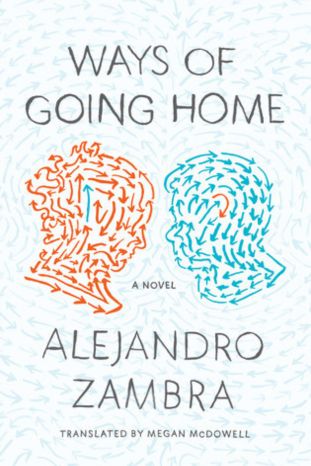
7. Ways of Going Home by Alejandro Zambra - 3.9/5
Alejandro Zambra is one of the famous contemporary authors from Chile. While the above novel takes place during the dictatorship of Pinochet, he was born during the Pinochet dictatorship. Apart from writing fiction, he also writes poetry.
Ways of Going Home begins during the 1985 earthquake in Santiago. A nine-year-old boy with no name meets Claudia, an older neighborhood girl. She asks him to follow her uncle Raúl, whose secretive behavior hints at political resistance.
The boy complies and becomes part of a mystery he doesn’t fully understand, Chile’s dictatorship under Augusto Pinochet.
Years later, the boy has become a writer reflecting on that experience. He revisits the memory of Claudia and writes a novel about her and her uncle.
Meanwhile, he also struggles with his own failed marriage and disconnection from his parents. So, his writing becomes a way to confront uncomfortable truths. The novel won the English PEN Award, making it one of the best novels about Chile.
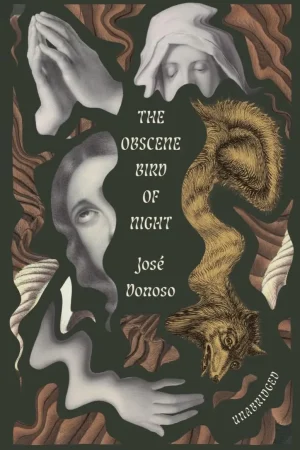
8. The Obscene Bird of Night by José Donoso - 4.2/5
José Donoso was one of the famous authors from Chile, who wrote both fiction and non-fiction. He lived the latter part of his life in self-imposed exile, returning to Chile permanently in 1981. He is considered one of the key figures of the Latin American Boom.
Humberto Peñaloza was a poor law student during the 1930s in Chile. He became the secretary and ghostwriter for the aristocratic Jerónimo de Azcoitía.
When Azcoitía’s wife gives birth to a severely deformed son, “Boy”, he hides the child in a crumbling mansion and creates an isolated world to shield him.
Over time, he is drawn into the strange world of the Casa de Ejercicios Espirituales, a religious home for deformed women and social outcasts. Eventually, he loses his grip on identity and begins to narrate the story through a fragmented alter ego, El Mudito.
From here on, the narrative becomes hallucinatory, with scenes between hallucinations, memories, and shifting perspectives. So, if you like grotesque imagery and surrealism, you will surely love these books from Chile.
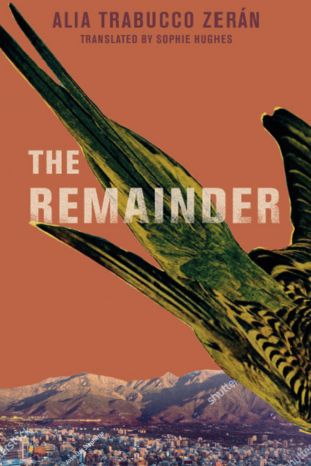
9. The Remainder by Alia Trabucco Zerán - 3.5/5
Alia Trabucco Zerán is a Chilean writer with an MFA in creative writing in Spanish from New York University. She has written 2 books, both to critical acclaim. The Remainder is one of the famous novels about Chile, which was shortlisted for the Man Booker.
Three friends—Iquela, Felipe, and Paloma— are the children of the parents who survived the Pinochet-era dictatorship. When Paloma returns from Germany with her mother’s ashes, the urn is lost at the Santiago airport. They go on a road trip to recover it, a journey that stirs up unresolved questions about their parents.
As they travel from Santiago toward the Andes, the story switches between Iquela’s rational voice and Felipe’s fragmented perspective. Their emotional detachment, inherited trauma, and confused identities mirror a country still struggling with its violent past.
What remains becomes the novel’s haunting question. If you want to explore more about how children cope with their past and sometimes that of their parents, you should check the coming of age movies.
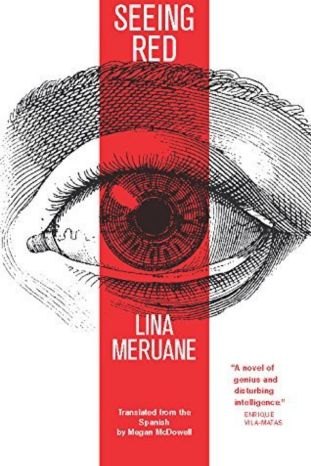
10. Seeing Red by Lina Meruane - 3.9/5
Lina Meruane is one of Chile’s most celebrated contemporary writers. She often writes about family, identity, and memory. She has a medical humanities background, so it is also a concurrent theme in her best books on Chile.
Lina is a young Chilean writer studying in early 2000s New York City. One day, just before a party, she experiences a violent hemorrhage in her eye, which gradually robs her of her vision. Now, she has to deal with this crisis, confronting her growing isolation in the city.
Lina’s partner, Ignacio, becomes her caregiver, but their relationship turns complex. As she grows more dependent, he grows more controlling. The power dynamic between them shifts constantly, between love and obligation.
At the same time, Lina plans a risky trip back to Chile, where her family must face her new condition. So, if you want to read something new, this is definitely one of the best Chilean novels.
Best Chilean Books | A Recap
It’s quite conclusive from the list of Chilean books by Chilean authors that there’s not a single voice or narrative. Another interesting factor is that many Chilean authors reside in the country.
One can attribute this to the restoration of democracy in the 1980s. This is unlike other Latin American countries, where many writers prefer exile or stay away for better prospects.
Anyway, if you have any favourite books from Chile or authors from Chile, please do share!
Sign Up For The Newsletter!
Do you want global book, music, and movie recommendations straight to your inbox?