When I wrote about the best Argentinian movies, I discussed how countries that live under military dictatorships often turn to art to process trauma and reclaim identity. Argentina’s film industry, for instance, evolved after the fall of the junta in 1983. It shifted to stories that directly confronted state violence, loss, and memory.
Argentinian books, however, had already been resisting, often in quieter but riskier ways, during the military dictatorship.
It’s no wonder that its literature is quite unique in terms of allegory, metafiction, and experimental narratives. Writers like Ricardo Piglia and Manuel Puig were masters of fragmented narratives.
And how can one forget Jorge Luis Borges, the master of philosophical and metafictional short stories?
So, this list of the best Argentinian books features stories that are restless, experimental, and unafraid.
1. Ficciones by Jorge Luis Borges - 4.4/5
Jorge Luis Borges is one of the most influential figures in 20th-century Latin American literature. One can equate his works in mastery to Gabriel García Márquez of Colombia, Jorge Amado of Brazil, Mario Vargas Llosa of Peru, Isabel Allende of Chile, and Juan Rulfo of Mexico, in Latin America.
Ficciones is one of Borges’s most iconic short story collections. It has 17 stories that blend fiction, philosophy, and literary criticism. The stories often present imaginary books, false authors, and non-linear structures, making them quite experimental.
“The Library of Babel” is one of the best short stories that imagines a universe entirely of books. “The Garden of Forking Paths” is a story that anticipates modern theories of parallel timelines.
“The Garden of Forking Paths” is another great story about a Chinese spy in World War I who discovers a book about the theory of time, where all possible outcomes happen simultaneously. And speaking of spies, you should also check the best spy movies of all time.
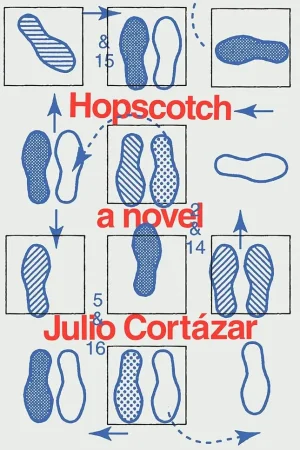
2. Hopscotch by Julio Cortázar - 4.2/5
Julio Cortázar was born in Belgium in 1914 to diplomatic Argentinian parents and grew up in Argentina. He is one of the Latin American Boom’s key figures, inspiring a generation of Spanish-speaking readers.
Hopscotch ( or Rayuela) is one of his best Argentinian books that you can read in multiple sequences. It is about Horacio Oliveira, an Argentine intellectual living in France. He spends his time in jazz clubs, philosophical debates, and has a failed relationship with La Maga.
When nothing seems to work, he returns to Buenos Aires. And that’s where the narrative becomes introspective. Horacio meditates on art, exile, freedom, and the limits of meaning. All this introspection turns the reader into an active participant.
What sets Hopscotch apart is its structure: it has two reading orders—one linear (chapters 1–56) and another that “hopscotches” through all 155 chapters according to a table he provides. It remains one of Cortázar’s most influential works for its narrative innovation and philosophical depth.
Julio Cortázar, like many other Argentinian authors, wrote in Spanish, and their works were translated into other languages. But you can always learn Spanish to enjoy Argentinian literature in Spanish.
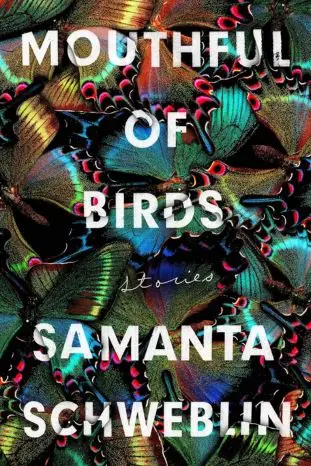
3. Mouthful of Birds by Samanta Schweblin - 3.7 / 5
Samanta Schweblin is one of the most famous Argentinian female authors of 21st-century Latin American literature. She is famous for writing surreal fiction that blends psychological horror with social commentary. She has been shortlisted for the Man Booker Prize for 2 times.
Mouthful of Birds is a collection of 20 short stories about the eerie and the uncanny in everyday life. Schweblin writes surreal tales where logic bends. Like, a girl survives by eating live birds, a telepathic daughter abandons her father, and a woman is stranded in a purgatory-like train station.
Her minimalist style creates tension through what’s left unsaid. The themes include gender, alienation, and violence, but always through a dreamlike or nightmarish lens. It is interesting how her stories disturb everyday expectations.
Mouthful of Birds was shortlisted for the Man Booker International Prize in 2019. The original Spanish edition also won the Casa de las Américas Prize for best short story collection.
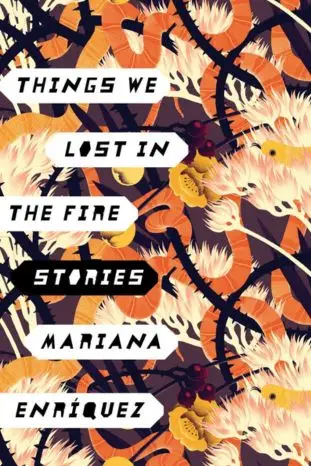
4. Things We Lost in the Fire by Mariana Enriquez - 4.0/5
Mariana Enriquez is the second Argentinian author of “new Argentine narrative“. She writes socially conscious stories by blending horror while discussing poverty, gender violence, and trauma.
Things We Lost in the Fire is a short story collection. The short stories are about urban decay, domestic abuse, missing children, and supernatural horror. Violence happens just below the surface, creating a tense atmosphere where the line between the real and the uncanny blurs.
In “The Dirty Kid” and “Adela’s House,” she uses realism with the gothic genre to expose deep social wounds. Her characters struggle psychologically due to Argentina’s economic crises, political silence, and ongoing femicide epidemic. Just like Samanta Schweblin, her stories provide darkness head-on.
The collection won the Premio Ciutat de Barcelona, making her one of the best Argentinian female authors.
5. Optic Nerve by María Gainza - 3.9/5
María Gainza is an Argentine writer and art historian. Basically, she was an art historian for publications like Artforum and The New York Times before turning to fiction. So, naturally, she uses her visual art knowledge in her introspective narrative fiction.
Optic Nerve is one of her best Argentinian books that blends fiction, memoir, and art criticism. An Argentinian woman (no name) is obsessed with art, and she recounts her life through reflections on various artworks and artists.
Each chapter paints discussions with personal experiences. Just like Argentinian female authors above, she overlooks traditional linear plot, she writes short pieces on identity, perception, and the transformative power of art.
Optic Nerve was a New York Times Notable Book of 2019 and one of Publishers Weekly’s Top Ten Books of the Year.
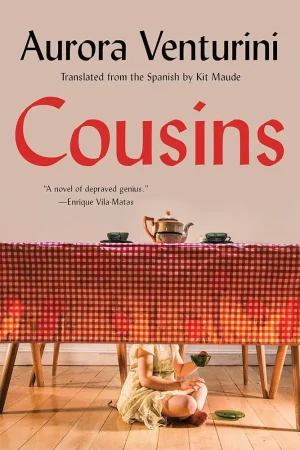
6. The Cousins by Aurora Venturini - 4.2/5
Aurora Venturini was/is one of the best Argentine writers and poets. Although she published over 40 books, she got recognition at the age of 85 when The Cousins won the prestigious Página/12 New Novel Award.
The Cousins is a darkly comic novel about the lives of four women from an impoverished, dysfunctional family in La Plata, Argentina. Yuna has a physical disability and dyslexia, she narrates her family’s struggles. Her narration reveals harrowing events, like illegal abortions, sexual abuse, and murder.
Despite her challenges, she finds escape through painting. Art becomes her path to financial freedom. She finds her footing as a painter despite the stark violence around her. Since her narration is candid, brutal, and sharp, which makes this one of the best Argentinian books.
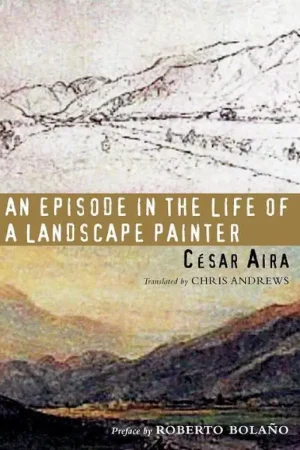
7. An Episode in the Life of a Landscape Painter by César Aira - 3.9/5
This is the 3rd Argentinian book in our list that somehow revolves around painting. And why not? Because it is written by César Aira, one of the best Argentine authors. César has published over a hundred short novels. His most common themes are history, surrealism, and metafiction.
This novel is about the real 19th-century German artist Johann Moritz Rugendas. Rugendas travels across South America in search of the ideal landscape. While crossing the Argentine plains, he suffers a disfiguring injury during a lightning storm, which is a turning point.
After the accident, he enters a dreamlike state of pain and delirium, which strangely increases his artistic vision. From here, the narrative becomes a meditation on art, beauty, and suffering, implying creation is born out of rupture.
Since César Aira mostly writes short novellas, you can read most of his works in one sitting.
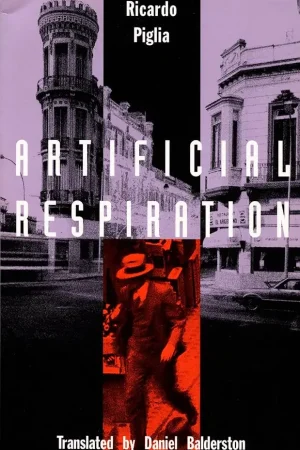
8. Artificial Respiration by Ricardo Piglia - 4.0/5
Ricardo Piglia was/is one of Argentina’s most respected writers and literary critics. Since he was a critic and political theorist, he used to blend these in his fiction with detective tropes. He rose to prominence in the 1970s and ’80s with fiction and non-fiction works critical of the military junta.
Artificial Respiration is a unique Argentinian novel, largely of letters between Emilio Renzi and his exiled uncle, Marcelo Maggi. It takes place during Argentina’s last military dictatorship. The letter correspondence between them discusses censorship, historical memory, and resistance.
Meanwhile, Maggi is also researching a mysterious 19th-century person who once served under dictator Juan Manuel de Rosas, and Renzi becomes part of the inquiry. As Renzi reads his uncle’s letters, he learns about a forgotten 19th-century political figure, Enrique Ossorio, who lived in exile during the dictatorship of Juan Manuel de Rosas.
Piglia uses these findings to draw parallels between historical repression and the modern regime. He shows how power, surveillance, and betrayal echo across generations.
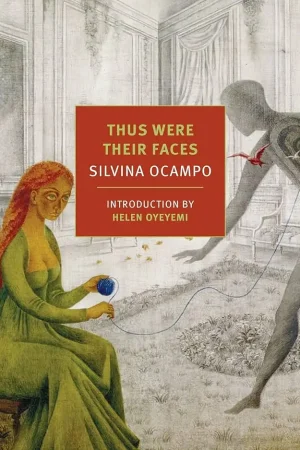
9. Thus Were Their Faces by Silvina Ocampo - 3.9/5
Silvina Ocampo was one of the youngest of the famous Ocampo literary sisters. Her elder sister, Victoria Ocampo, was a founder of the influential literary magazine, Sur. Whereas Silvina, while quieter, was a surrealist short story writer and poet.
Thus Were Their Faces is a collection of her best short stories, written across several decades. The stories are eerie, uncanny, and grotesque. Like, it features children with violent impulses, women who unravel, and social hierarchies flipped on their heads.
For example, in “The Impostor,” a man becomes obsessed with impersonating someone who doesn’t exist. While “The Velvet Dress” is about the horror of being trapped by appearances and social expectations. Similarly, her other stories also have the same situations, but quickly turn into absurd scenarios.
While Ocampo received little recognition during her lifetime, her work has since gained critical acclaim. Her ability to blend fairy tales with brutal realism makes this one of the best Argentinian books.
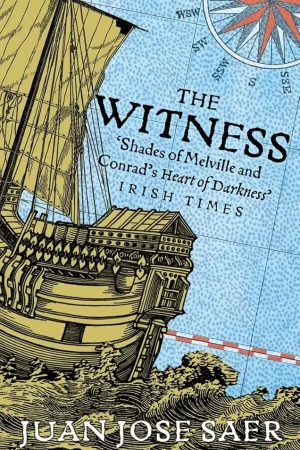
10. The Witness by Juan José Saer - 4.0/5
Juan José Saer was born to Syrian immigrants in Argentina. He was one of the most innovative voices in modern Argentine literature, for blending philosophical depth with experimental narrative. Though he lived in France, his fiction was mostly about Argentina.
The Witness is about a 16th-century Spanish cabin boy who is captured by an Indigenous tribe after a colonial expedition. Instead of being killed, he becomes a silent observer of their customs, including a shocking ritual of cannibalism.
The Witness tells the story of a 16th-century Spanish cabin boy who is captured by an Indigenous tribe in South America after a disastrous colonial expedition. Instead of being killed, he becomes a passive observer of their way of life, including a ritual involving cannibalism.
He lives among them for ten years before being released and returning to Spain. As an old man, he recounts the strange memories of his time in captivity. But the truth remains elusive: what he witnessed defies easy interpretation.
Interestingly, Juan José Saer doesn’t name the indigenous tribe in one of his best Argentinian novels. However, if you are interested in knowing more about them, you can choose to read some indigenous books.
11. Heartbreak Tango by Manuel Puig - 3.9/5
Manuel Puig was/is one of the best Argentinian authors, who used to blend popular culture, like radio serials, soap operas, and Hollywood films, with literary experimentation. He challenged traditional storytelling by using formats like letters, interviews, and police reports to tell socially critical stories.
Heartbreak Tango reconstructs the life of Juan Carlos Etchepare, a tuberculosis-stricken ladies’ man. He reconstructs that through a collage of letters, diary entries, obituaries, and gossip. The nonlinear format reveals the romantic fantasies and frustrations of women whose lives he briefly touched.
The novel is basically a critique of the illusions of love that the media shapes. He masterfully dissects social hypocrisy, sexual repression, and the emptiness behind romantic clichés. It was also adapted into the film of the same name in 1974.
Best Argentinian Books | A Recap
Our discussion of the best Argentinian books shows how Argentinian literature is quite unique in terms of narrative, structure, and experimentation. And for these reasons, Argentinian authors have made it big in world literature.
You will rarely see this many authors from the same country using the structure itself as a tool. And this structure is visible in metafiction, letters, or shifting timelines to reflect on politics, memory, or identity.
If you have any favourite Argentinian novels, leave a comment!
Sign Up For The Newsletter!
Do you want global book, music, and movie recommendations straight to your inbox?
When most people think of Latin American literature, magical realism always comes to mind and that makes sense. Writers like Gabriel García Márquez from Colombia,