De Steinz: How To Map World Literature
Cultural Reads is all about reading globally, discovering different perspectives, and realizing just how much there is to choose from when you look beyond your
Whenever you read a travel book, you always read through the writer’s perspective. And this point makes sense because, let’s say, what will happen if two writers visit the same country?
Naturally, they will write differently. And it’s because of their background, prejudices, curiosity, and encounters. So for me, the most interesting travel books, therefore, are first about the writer and then the country they are visiting.
This becomes especially clear if you take writers from different regions. If you take travel writing from the United States or Europe, you might find the writing mostly about their discomfort, culture shock, or difficulty adjusting.
Those experiences can matter, but travel literature should be more than that.
What matters most is that the reader gets to know about the country’s culture, history, and everyday life.
For that reason, it is worth reading travel books from different backgrounds. Although no writer gives an unbiased view of a country, unique writers bring unique perspectives.
And my list of travel books does just that. So let’s start reading!
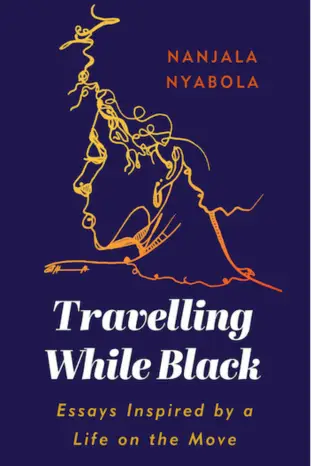
Nanjala Nyabola is a Kenyan writer and political analyst with regular writings on African society, injustice, and migration. This travel literature book is a reflection of her frequent work travels.
But unlike mainstream travel books, she, as a Black woman, questions how race, passport privilege, gender, and class change travel.
In the opening essay, she visits Haiti after the 2010 earthquake, where she sees people seeing her as an outsider, despite being her black, because of her foreign education and affiliations.
Later, she discusses travel guidebooks, and how they portray Africa. She writes about her solo travel through West Africa, including Burkina Faso, where guidebooks were filled with travelling danger. But she finds none of that.
In Botswana, she writes about the literary memory of Bessie Head, so great reflections on African writing, exile, and belonging.
In Sicily and the Mediterranean, she writes about African migrants arriving by sea, talking about the harsh reality of borders and migration. You can read more in books about migration.
So a great travel book where movement drives experiences. Here’s a list of more Kenyan writers you can read.
And why not enjoy some great Kenyan music, especially soulful benga.
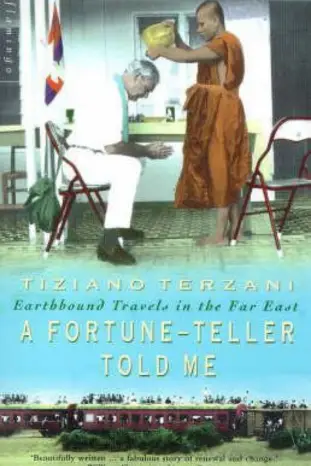
Tiziano Terzani was a pioneer of travel literature from Italy. He spent around twenty-five years in Asia, reporting on wars, revolutions, and political upheavals for Der Spiegel.
And the book’s title is interesting because in 1976, as a Der Spiegel correspondent in Asia, a Hong Kong fortune-teller told him not to fly in 1993 or he would die.
But when 1993 came, he went anyway. And it wasn’t without drama as a UN helicopter crashed in Cambodia in 1993, and the journalist who went to Terzani’s place was among the passengers.
And because of that he refuses to fly. This travel book to Asia is through trains, ships, buses, cars, and on foot. He travels to Burma, Thailand, Laos, Cambodia, Vietnam, China, Mongolia, Japan, Indonesia, Singapore, and Malaysia.
He meets common people, fortune tellers, astrologers, shamans, and spiritual people. And in these conversations, the reader experiences markets, borders, old beliefs and political tensions at crossroads.
In my opinion, this could also be one of the best books to read while traveling. And if you are traveling, you should also check these Italian books.
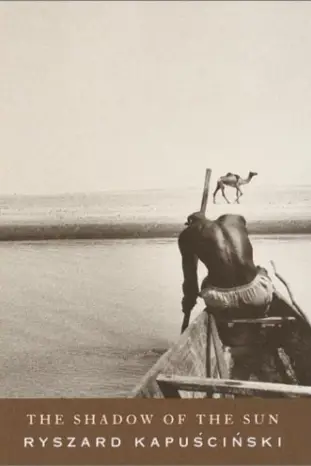
Ryszard Kapuściński was a pioneering Polish reporter for Africa, Asia, and Latin America for decades. In 1957, he went to Africa as the first African correspondent of Poland’s state news agency.
What I wrote about European writers in the introduction, it happens here, as the African heat, light, and street life shocks him.
Despite this, he continues his travels to East Africa from Dar es Salaam and Kampala to cover Uganda’s independence.
His writings on Idi Amin are quite revealing. He goes back in history to explain how colonial borders, the British army, ethnic divisions, and military power made him a mad dictator. Amin’s rise.
Overall, this is one of the best travel literature books because you get to experience Africa across several decades. Also if you like to read travel writing with reportage.
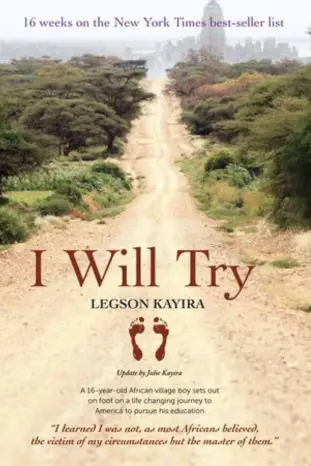
Although I Will Try is an inspirational autobiography, it is also about traveling, so we can take it as a travel literature book.
Legson Kayira was a novelist but this is one of his most memorable books. He shares his travel story before the journey begins. His book’s title comes from his Livingstonia Secondary School, whose motto was “I Will Try.”
And that motto inspired him to leave Malawi and try to reach America for higher education.
Kayira shares his village life, his schooling, and his youth. And how poverty, village expectations, and limited opportunities meant he had to think beyond.
One day, he sets out on foot with little food, an axe, the Bible, and Pilgrim’s Progress. He walks through East Africa and reaches Kampala. Here, he finds information about Skagit Valley College in Washington.
He eventually gets his visa and reaches the United States.
To know more about his country, Malawi, you can also read about Malawi music.
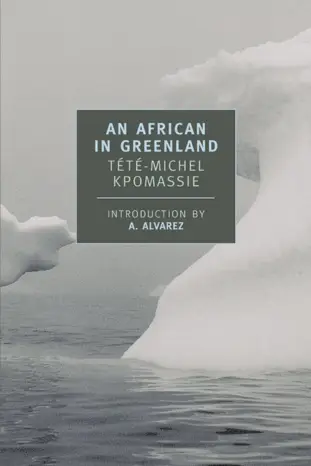
Tété-Michel Kpomassie, as a teenager, read Robert Gessain’s The Eskimos about Greenland. Interestingly, he had survived a python attack recently. So, a country with no snakes was fascinating to him.
He eventually left Togo and spent years working his way to West Africa through Ghana and Senegal.
And then towards Europe through France, Germany, and Denmark.
He works, learns languages, and waits for a chance to go farther north, sharing how difficult it was for a young African to travel.
Once he reaches Greenland, he writes about his stays with Inuit families, eats mattak, learns to fish through the ice, travels by dogsled, and joins local gatherings.
For me, it is one of the best travel writing books, where the travel is across continents. It won the Prix Littéraire Francophone International in 1981.
This is one of the most exciting books about traveling in the list. Andrés Neuman, an Argentine-Spanish novelist, wrote this book touring nineteen Latin American countries after his novel Traveller of the Century won the Alfaguara Prize.
Because he often spent only a night or two in each place, he recorded airports, taxis, hotels, newspapers, conversations, and political news instead of pretending that he understood each country.
In Venezuela, he visited during Hugo Chávez’s presidency and writes about the government’s influence over publishing and public speech.
For Honduras, he has to decide whether to continue after the 2009 coup against President Manuel Zelaya. Elsewhere, travelling from Argentina to Uruguay, he writes about his favourite writers.
Also, how neighbouring countries share Spanish while having different literary identities. Something I also talk about in my learn Spanish post.
Since it is a brief work on Latin America, it could also become one of your favourite books to read while traveling.
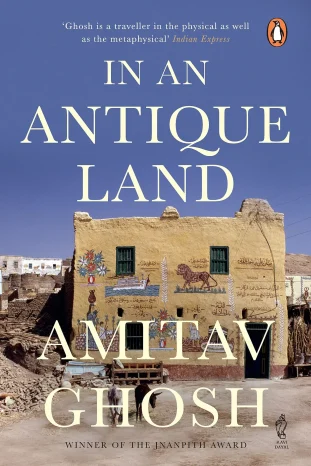
Amitav Ghosh is one of the finest writers of our times. A recipient of prestigious literary awards, he has written many great fiction and non-fiction books. I covered his, Sea of Poppies, in historical fiction books.
In an Antique Land is his another ambitious travel literature work. And for that, he went to Egypt in 1980 as a doctoral student in social anthropology. He used to live in the Nile Delta villages of Lataifa and Nashawy while researching rural Egyptian society and learning Arabic.
He writes about the families who host him and the questions villagers ask about India. They want to know why Hindus burn their dead, whether people worship cows. He also discusses the Iran–Iraq War and how military service brought opportunities and gloom to villagers.
The book also has a fascinating discussion about the documents preserved in the Cairo Geniza. From these papers, he reconstructs the life of Abraham Ben Yiju, a Jewish merchant who travelled from the Middle East to India.
So if you like travel writing books with historical investigation, this is an exciting read.
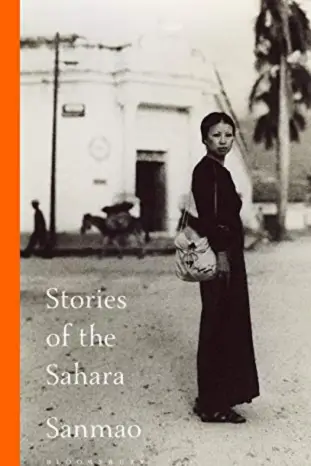
Sanmao was the pen name of Chen Ping, a Taiwanese writer who went to the Sahara in 1974 with her Spanish husband, José María Quero. Her travel writings about the Sahara were first published in one of Taiwan’s newspaper.
This later became a famous book across the Chinese-speaking world, selling millions of copies.
She writes how she practically lived a desert life. Like, how she furnished their home with discarded materials, and served Chinese meals to José. Also, the laborious paperwork to marry under Spanish colonial administration and their simple wedding in El Aaiún.
The interesting part is the discussion on how the Spanish control weakens and the conflict over Western Sahara forces them to leave.
Although it is one of the great books about traveling, it also has stereotypes and a colonial sense of superiority, so it deserves appreciation and criticism.
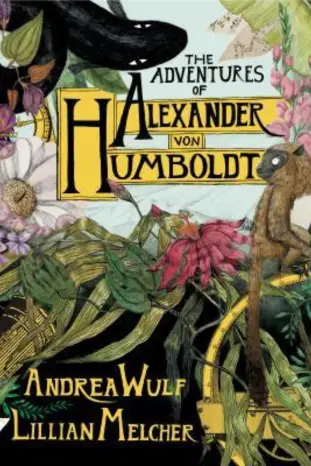
This is not one of typical travel books but a book on Alexander von Humboldt, a German polymath, explorer and naturalist.
This is extensive work and Andrea uses Humboldt’s diaries, letters, maps, and drawings to retell the five-year expedition he made through the Americas with the French botanist Aimé Bonpland between 1799 and 1804.
In Venezuela, Humboldt and Bonpland travel by canoe along the Orinoco and investigate its connection with the Amazon. Humboldt also studies electric eels and records the plants, animals, water levels and temperatures.
Humboldt, later, goes to Andes, where he climbs Chimborazo in present-day Ecuador. Although he cannot reach the summit, he climbs higher than any known European mountaineer at the time.
Humboldt’s warnings are probably one of the earliest about climate change due to deforestation and colonial agriculture destroying soil, water supplies, and local climates.
Adventure travels these days are easy. Adventures have access to the internet, GPS, safety gears and safe traveling routes and vehicles. But it was not 1963.
And it wasn’t easy either for a solo female traveling on a bicycle.
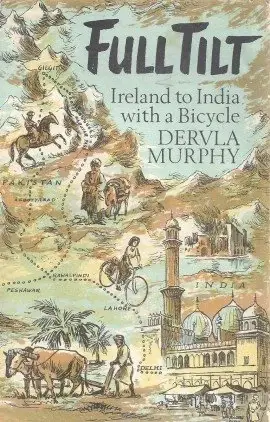
Dervla Murphy was thirty-one when she left Ireland on her single-speed bicycle. She wanted to travel to India since childhood and in January 1963, she finally began cycling through one of Europe’s harshest winters.
Her diary becomes interesting when Murphy enters Iran, Afghanistan and Pakistan. In Iran, she uses her pistol to scare men who try to rob her. In Afghanistan, she suffers three fractured ribs when a rifle strikes her during a bus journey. And so much more.
She spends most of her time travelling through Afghanistan’s mountains and northern Pakistan.
It is a six-month journey of roughly 3,500 miles through Europe and Asia and a travel history of the 1960s. She has written many other books about traveling, this one remains one of her best works.
I have many more travel books that I can discuss but I will mention them briefly if you are looking for more inspiration and exciting reads.
Book | Author | What the book is about |
The Caliph’s House | Tahir Shah | Shah moves his family from London to a mansion in Casablanca and struggles to restore it. He talks about Moroccan customs, household superstitions, and jinn beliefs. |
A.A. Gill Is Away | A. A. Gill | A collection of twenty-five travel essays covering places and subjects such as famine-stricken Sudan, the disappearing Aral Sea, etc. Gill is a master of travel reporting with dark humour. |
Sastun: My Apprenticeship with a Maya Healer | Rosita Arvigo with Nadine Epstein | Arvigo recounts her apprenticeship with Don Elijio Panti, a Maya healer in Belize. He uses rainforest plants, spiritual practices, and traditional medicine. |
Walking the Nile | Levison Wood | Wood shares his nine-month, 4,250-mile journey on foot from the Nile’s source in Rwanda to the Mediterranean in Egypt. He travels through conflict and records people’s lives. |
There is an Arabic saying, السفر وسيلة الظفر, which translates to “Travel is the source of success.” But success here does not always mean reaching a destination or achieving a goal.
Sometimes, it means returning with a wider mind, less assumptions, and an understanding of how differently people live. That is why travel books matter. A writer takes the journey, but the questions it raises often stay with the reader.
Also, travel literature answers many questions that we, otherwise, may not find answers to.
Do you want global book, music, and movie recommendations straight to your inbox?
Sign up for the newsletter below!

Cultural Reads is all about reading globally, discovering different perspectives, and realizing just how much there is to choose from when you look beyond your

I used to think creativity was only for artists, writers, and painters. Although a job in finance can have a degree of creativity, I never

When most people think of Latin American literature, magical realism always comes to mind and that makes sense. Writers like Gabriel García Márquez from Colombia,