The Best Peruvian Books | A Top 10

When most people think of Latin American literature, magical realism always comes to mind and that makes sense. Writers like Gabriel García Márquez from Colombia, Juan Rulfo from Mexico, Isabel Allende from Chile, and Jorge Luis Borges from Argentina made that style famous.

That association is not wrong, exactly. Magical realism produced some of the greatest novels of the twentieth century, and Latin America owns that tradition. 

However, the association of Latin America and Magical Realism also creates misunderstanding.

Peruvian Authors

You see, Peru’s most celebrated writers, Mario Vargas Llosa and Alfredo Bryce Echenique, had nothing to do with magical realism. 

Yet, people associate some Peruvian writers with the genre.

Vargas Llosa wrote in a realist style about power and society. Bryce Echenique wrote with dark humor about ordinary Peruvian life. 

And the same is true for other famous Peruvian authors. So let’s discuss some more books about Peru that will be worth your time.

1. The Time of the Hero by Mario Vargas Llosa - 4.2/5

Books by Peruvian Authors

Mario Vargas Llosa was/is one of Latin America’s most influential writers and a Nobel Prize winner in Literature. He was a prominent writer of the Latin American literary boom of the 1960s and 1970s. His realist novels are about politics, social injustice, and human psychology.

The Time of the Hero takes place in Leoncio Prado Military Academy in Lima. A group of cadets live under strict hierarchy and fear of authority. However, cadets find their own ways to retaliate. 

For example, an aggressive Jaguar steals the academy’s examination papers. This action sets the events that exposes the cadets’ moral weaknesses, rivalries, and the oppressive nature of military discipline.

Since, it was his first novel, apart from a short story collection, it went on to win the Biblioteca Breve Prize. After that, there was no looking back for Mario Vargas Llosa.

I have also previously covered Mario’s novel, The Bad Girls, in best 250 novels and, The Feast of the Goat, in best historical fiction books.

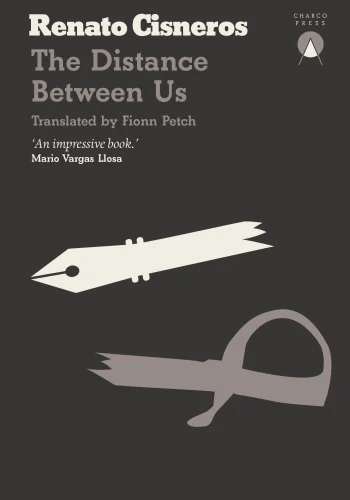
2. The Distance Between Us by Renato Cisneros - 4.1/5

the-distance-between-us

Renato Cisneros had a prominent career as a journalist, broadcaster, and TV presenter in Peru before venturing into fiction writing. Mind you, he also wrote poetry before that. The Distance Between Us is one of his best fiction books about Peru.  

It’s a sort of personal narrative and family saga in which Cisneros sets out to understand his father, Luis Federico, who was a powerful Lieutenant General in the Peru military. He looks back at his childhood and the emotional distance that he felt. 

Using memories, family stories, public records, and personal reflections, he creates a portrait of a man, who he, and the public, admired and feared. 

He covers his early years and rise through the military, his controversial roles as Interior Minister and Minister of War during Peru’s turbulent 1970s and 1980s, and time at home, when they were at odds personally and politically. 

Since most of the famous Peruvian books are in Spanish, you can learn Spanish to enjoy literature in native language.

3. One Hundred Guinea Pigs by Gustavo Rodríguez - 3.99/5

Gustavo Rodríguez is one of the best Peruvian authors and broadly of contemporary Latin American literature. He has written many novels over the past two decades with notable awards and nominations to his name.

This novel is set in an elite neighborhood in Lima with views over the Pacific Ocean. Here, elderly people from the wealthy class are living their final years. Eufrasia is a working-class woman who travels daily on public transport to care for them.

She dreams of saving enough money to buy guinea pigs and start a new life. 

Apart from caring for personal people, she also cares for a group in a care home who call themselves “The Magnificent Seven”. Here, things become complex.

As trust grows, some begin to hint at how they want to end their lives, leaving Eufrasia in a moral dilemma and difficult choices.

The novel has sold over 50,000 copies in Spanish, making it one of the best books by Peruvian authors.

4. Red April by Santiago Roncagliolo - 3.7/5

Santiago Roncagliolo is a contemporary Peruvian novelist and screenwriter who blends political history with thriller. His writing often focuses on fear, violence, and the lasting impact of political conflict in Latin America. 

Red April is set in Ayacucho, Peru, during Holy Week in the year 2000. It is a period just after the worst of the internal conflict between the Shining Path guerrillas and the Peruvian state. 

Félix is a prosecutor, who lives a by-the-book but boring life. The situation changes when he starts to investigate a bizarre and horrifying murder. 

So, he comes to the city of Ayacucho, where he confronts corruption and other uncomforting realities. He also comes across mutilated bodies and bear markings related to Shining Path rituals. 

Eventually, his discoveries push him towards a tragic descent into madness.

5. The Blood of the Dawn by Claudia Salazar Jiménez - 4/5

Claudia Salazar Jiménez is the first female Peru author of our Peruvian books. She is famous for her work on gender, memory, and violence in Latin America. Beyond fiction, she has edited multiple anthologies of women’s literature in Latin America.

The novel opens with a depiction of the Lucanamarca massacre that sets the tone for everything that follows.

Specifically, there are three women who are torn apart during this period when the Shining Path insurgency was at its peak. 

The three women have different parts in the conflict. Melanie is a foreign photojournalist documenting the violence, Modesta is a Quechua peasant woman from the Andes and Marcela who has joined the Shining Path as a militant.

Each of the three women experiences the conflict differently but none escapes it. 

The novel is one of the first Peruvian books that explore the links between gender violence, ethnicity, and race during that period. The English translation by Elizabeth Bryer also got critical attention, with reviews in the NYT, NPR Books, etc.

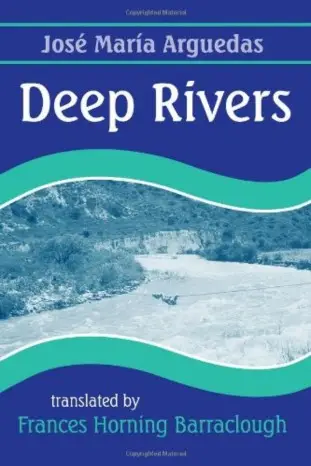
6. Deep Rivers by José María Arguedas - 3.8/5

José María Arguedas, after the death of his mother, was raised by Indian servants, from whom he got to know about the Quechua language and culture. So, he went on to become one of the few Latin American writers who knew the Spanish and indigenous Quechua culture. 

Deep Rivers is one of his famous Peruvian books that reflects the indigenous Quechua culture.

Ernesto is the son of a country lawyer, who was brought up by Indian servants and he went to a Catholic boarding school. Meanwhile, in Abancay, his father Gabriel hopes to establish a law practice. 

While at the school, he witnesses two events. A group of female chicheras stage a public insurrection demanding fair distribution of salt. He joins them and the school punishes him.

 Shortly after, a typhus epidemic breaks out across the nearby haciendas, driving indigenous people to the city. The school temporarily closes, and Ernesto, not liking the school, tries to rejoin his father. 

This great Peruvian novel is included in the 1001 Books You Must Read Before You Die list by Peter Boxall. 

I have previously written about indigenous novels. You can check my list my indigenous books and Native American books.

7. A World for Julius by Alfredo Bryce Echenique - 4.2/5

Alfredo Bryce Echenique was a classic Peruvian writer known for his ironic works about the elite class of Lima. He himself belonged to the wealthy class. So, that gave him first-hand experience to write about class divisions, family dynamics, and the emotional isolation within elite society. 

Julius is a wealthy young boy growing up in Lima during the 1950s. After the death of his father, his mother Susan remarries Juan Lucas, a rich and status-conscious man. 

Meanwhile, he grows around nannies and maids who raise him. And, we see him observing the privilege of his family and the lives of the domestic workers.

As Julius grows older, all he observes is inequality. So, he makes emotional connections with servants like Vilma and Nilda. This and specific incidents shape his understanding of class cruelty and inequality.

8. Contarlo todo by Jeremías Gamboa - 3.6/5

Jeremías Gamboa is one of the famous contemporary Peruvian authors and journalists. He has written a short story collection Punto de fuga and three novels. Contarlo Todo is his debut novel and remains one of the best fiction books set in Peru. 

Gabriel Lisboa belongs to a lower-middle-class background in Lima and aspires to become a writer. He studies at a prestigious university where he feels out of place among wealthier students. 

However, he still befriends aspiring writers and intellectuals who introduce him to literature, parties, and a more elite social world.

Also, in university, he gets into a complicated romance increasing his insecurity and desire for acceptance. Meanwhile, he also tries to build a literary career while dealing with financial pressure and self-doubt. 

This journey gradually becomes a struggle between ambition and identity, as Gabriel must decide whether to adapt to the world he desires or remain the same.

It remains one of the best coming-of-age books about Peru. And if you like the genre, you should also check coming of age movies.

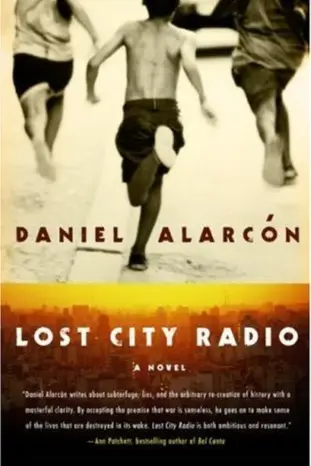
9. Lost City Radio by Daniel Alarcón - 3.7/5

Daniel Alarcón is one of the famous Peruvian authors of this generation. His debut short story collection War by Candlelight was a finalist for the PEN/Hemingway Award. He regularly writes for The New Yorker. He also hosts a Radio Ambulante, a Spanish-language narrative journalism podcast.

Lost City Radio happens in a no-name Latin American country recovering from a long internal conflict. Norma is a radio host who runs a program where people call in to search for relatives who disappeared during the war. 

Years earlier, her husband Rey, a journalist, also vanished while traveling to report on violence in remote regions. 

Things become complex when a boy named Victor from a remote jungle village arrives at the radio station claiming to have information about Rey. As Norma listens to him, she begins to revisit the past. 

This encounter forces Norma to confront the truth about Rey’s disappearance, turning her search into a reckoning with memory, loss, and the lasting impact of the conflict.

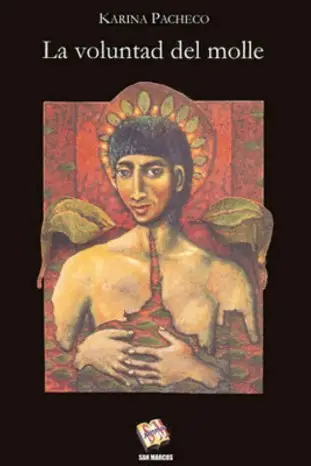
10. The Will of the Molle by Karina Pacheco Medrano - 4.3/5

Karina Pacheco Medrano is one of the best female Peruvian novelist and journalist whose work often explores memory, family history, and social change in Peru. The Will of the Molle is one of her best Peruvian books about personal and collective memory.

Rosa María is an anthropologist who returns to her rural hometown in the Andes after the death of her father. Her father’s property includes a stand of molle trees, a native South American species, that symbolize roots, continuity, and the passage of time. 

She must sort her father’s affairs and decide what to do with the land, forcing her to confront conflicting versions of family history and tensions within her community.

As she tries to solve the problem, she comes across disputes over inheritance, disagreements about the land, and memories of past conflicts between local families. 

Through this process, and in honoring family legacy, she realizes that caring for the land means honoring her family and community.

Best Peruvian Books | A Recap​

Best Peruvian Books

Although most of Latin American literature is magical realism, Peruvian books are about realism, memory, and everyday life. And how the the choices characters make, the ties that bind them to family and community, and the ways memory of conflicts shapes identity.

And books by Peruvian authors are not the only thing that binds the community and defines their identity. The story of Peruvian food is not different which the famous Peruvian writer, Rosario Olivas Weston,shared with me.

If you have any unique stories or books about Peru, please do share.

Subscribe to my Substack newsletter and keep visiting CulturalReads!

FAQ

1. What Are the Best Peruvian Books to Read?

Some of the best Peruvian books include The Time of the Hero by Mario Vargas Llosa, Deep Rivers by José María Arguedas, Red April by Santiago Roncagliolo, The Blood of the Dawn by Claudia Salazar Jiménez, and A World for Julius by Alfredo Bryce Echenique.

2. Who Are the Most Celebrated Peruvian Authors?

The most celebrated Peruvian authors include Mario Vargas Llosa, who won the Nobel Prize in Literature in 2010, José María Arguedas, Santiago Roncagliolo, Alfredo Bryce Echenique, and new writers such as Claudia Salazar Jiménez and Jeremías Gamboa.

3. Are There Any Fiction Books Set in Peru Worth Reading?

Yes, several fiction books set in Peru explore the country’s history and political violence. Red April is set in post-conflict Ayacucho, A World for Julius is set in 1950s Lima, and The Blood of the Dawn is set during the Shining Path insurgency in the Andes.

4. What Are the Most Important Books About Peru for Understanding Its History?

The most important books about Peru for understanding its society include Deep Rivers by Arguedas for its portrait of indigenous Andean life, The Distance Between Us by Renato Cisneros about military rule, and One Hundred Guinea Pigs by Gustavo Rodríguez.

5. Where Can I Find Books by Peruvian Authors in English Translation?

Many books by Peruvian authors are available in English translation through major publishers. Lost City Radio by Daniel Alarcón, Red April by Santiago Roncagliolo, and The Blood of the Dawn by Claudia Salazar Jiménez.

Sign Up For The Newsletter!

Do you want global book, music, and movie recommendations straight to your inbox? 

Sign up for the newsletter below!

Looking For More Books?

Cultural Reads