How to Discover the World | Top 10 Best Travel Books
Whenever you read a travel book, you always read through the writer’s perspective. And this point makes sense because, let’s say, what will happen if
I used to think creativity was only for artists, writers, and painters. Although a job in finance can have a degree of creativity, I never thought people in those industries could really be creative.
Over time, my idea about creativity shifted, though.
I now see it more as both a spiritual practice (or natural human need) and a brain function we can consciously influence.
Let me explain.
Many writers talk about a feeling of channeling, a force writing through you. You could call it God, the universe, your subconscious, or simply inspiration. The famous musician Jon Batiste, for example, describes his concerts as spiritual experiences, rather than performances. I’m sure this phrasing helps with marketing efforts, but it also highlights a more commonly held view among artists and creatives.
To give you another example, Michael Jackson said that whenever he’d have an idea, he’d have to write it down, otherwise he’d lose it. In those cases, the universe might entrust the task to another person, according to Elizabeth Gilbert in this podcast episode.
And although these examples are a tad extreme, you probably (already) experience them on a subtle level, simply by following your interests and doing what you think is fun. It seems that when we let go of expectations through play or rest, inspiration strikes.
And that’s where the scientific part comes in.
When you rest, the task-focused part of your brain quiets down to make room for the default mode network, which handles spontaneous associations and mind-wandering. You’re letting your subconscious speak.
Knowing this allows you to use it to your benefit.
You don’t have to force yourself into another breakup or keep sitting around for inspiration to strike. Instead, you can create the conditions that invite it.
There are many methods, from taking a hot shower to meditation and journaling.
To help you find your method and shape your own idea about what creativity is, let’s dive into this post’s resources.
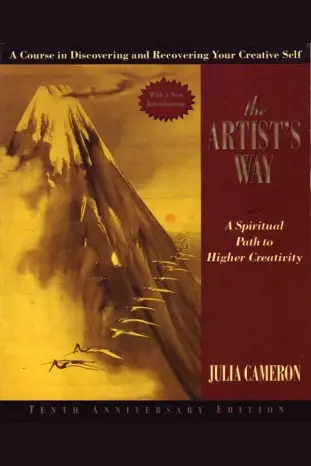
The Artist’s Way is one of the most influential books about creativity because it treats creativity like a practice. Cameron argues that many people are naturally creative but fear, routine and self-judgment hinders that process.
Her method is quite simple, focusing on Morning Pages and Artist Dates.
Morning Pages is basically journaling 3 pages each morning. The goal is to clear mental clutter. For me, similar to meditation, observe your thoughts, get rid of blocks.
Artist Dates are the opposite side of the process. Cameron encourages readers to regularly spend time alone doing something playful, inspiring, or emotionally nourishing.
This matters because creativity rarely appears when the brain is overloaded with tasks. Often, ideas arrive during periods of relaxation, reflection, or boredom. For me this is one of the great self development books to explore your creative self.
This is one of the most thoughtful books on how to be creative. Rubin, who is famous for producing for artists like Johnny Cash, Red Hot Chili Peppers, Jay-Z, and Lady Gaga, emphasizes that he has “no technical ability.” Instead, strength comes from intuition about what the work itself needs.
Much like the ideas in The Artist’s Way, Rubin treats art as something to associate with awareness and presence. He argues that creativity works when we notice what is around us. So, rather than forcing ideas, we need to create space for intuition to emerge.
Rubin removes the pressure and seriousness that people often attach to art. His line, “Some things are too important to be taken seriously. Art is one of them,” is all we need. Like Julia Cameron, he views the artist as a kind of vessel through which ideas pass.
There’s a similar book which argues that your brain isn’t to hold ideas but creativity. The book is, Design Your Work by Thiago Forte, which I covered in the best non fiction books of all time.
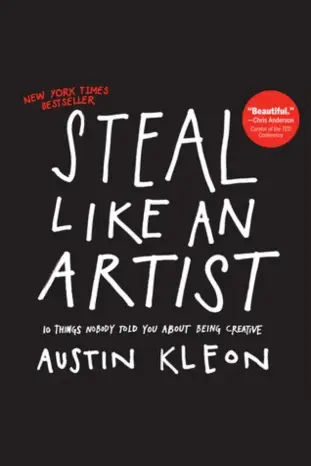
T. S. Eliot wrote in his essay collection, The Sacred Wood: “Immature poets imitate; mature poets steal.”
That quote perfectly describes Steal Like an Artist. Kleon negates the myth of originality and argues that every creative person is what they consume. Everyone steals in some way. You may call it inspiration, but inspiration is often borrowing other people’s work and giving your perspective.
It matters because many people never begin creating at all due to the pressure of having completely original ideas. And Kleon treats influence as natural and unavoidable, and over time your experiences, subconscious interests, and personality begin shaping those influences.
What makes this one of the best books about creative thinking is its use of practical advice about building a creative life. It explains how to keep a “swipe file” of inspirations, to work consistently instead of waiting for motivation, sharing your work before you feel ready.
Although people criticize this book on creativity for falling into familiar Western travel stereotypes, I found the book honest. She shares a period of life with vulnerability and emotional openness. For me, the memoir is less about travel and more about identity, healing, and learning.
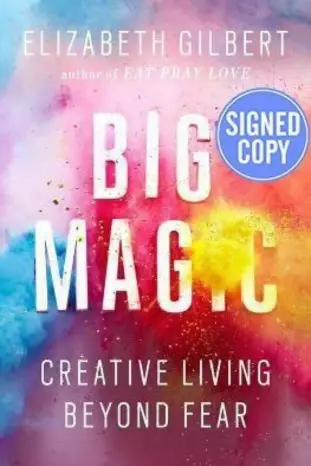
That same philosophy is in her another book, Big Magic, one of the most thoughtful books about being creative. Gilbert talks about ideas as living things that visit people temporarily, which many artists describe as inspiration arriving during relaxation, reflection, or openness.
In Big Magic, Gilbert removes fear and seriousness surrounding art. She argues that creativity does not need to come from suffering or genius alone, but it requires discipline and enjoyment. She connects these ideas with journaling, meditation, solitude, and quiet observation.
She’s a student of the Artist’s Way and thinks about creativity in many similar ways. If you want to learn more about her and The Artist’s Way, check out this podcast.
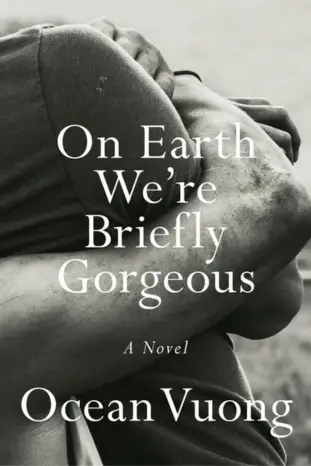
Ocean Vuong is one of the youngest influential literary voices for his experimental writing style. He was born in Vietnam and grew up in the United States. His writing focuses on memory, displacement, identity, family trauma, queerness, and language itself.
What makes Vuong especially interesting is that he resists AI slop writing, and his work feels unpredictable.
He has also spoken in detail about the creative process itself. In interviews and podcast conversations, he describes writing as listening closely to language and the subconscious mind.
He has written some of the best Vietnamese books, such as On Earth We’re Briefly Gorgeous and Time is a Mother.
If you want to understand more about his writing and process, his appearance on the How I Write podcast is especially insightful.
Also, don’t forget to explore more about his native country through Vietnamese films, Vietnamese music and books about the Vietnam War.
This is not a book, yet it has everything to do with writing and how to be creative. David Perell is the host of this podcast and he has written many essays on the creative writing process.
He also has a writing course, Write of Passage. If your art is writing, Perell has all the resources you need and you’ll learn from him and other writers through his podcast.
Perell also has a newsletter with the same name, How I Write, that you can subscribe to.
Creative Pep Talk is another practical podcast about writing. Andy himself is an illustrator, writer, and creative entrepreneur, so he brings a lot of personal experience to the podcast.
However, he hosts people from all the creative fields to talk about their creative process. That, in a way, adds up with his own experience.
He also has a newsletter, Andy J. Pizza, on Substack.
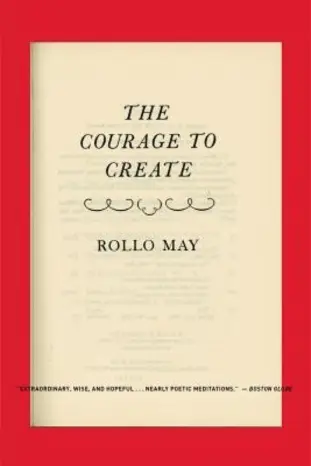
The Courage to Create is one of the unique and classic books on creativity because it comes from the perspective of existential psychology. It discusses why creativity matters psychologically and socially, especially during rapid cultural change.
He draws from psychology, philosophy, mythology, and art history, discussing figures like Pablo Picasso, Soren Kierkegaard, and Sigmund Freud. He discusses these personalities to explain how creative breakthroughs happen during tension and transition.
One of the book’s most valuable ideas is May’s distinction between “talent” and “creativity.” For him, creativity is the courage to create something despite uncertainty. Many people avoid being creative because of criticism, isolation, or changing one’s identity.
The book remains one of the great books about being creative for discussing creativity as a psychological and philosophical act.
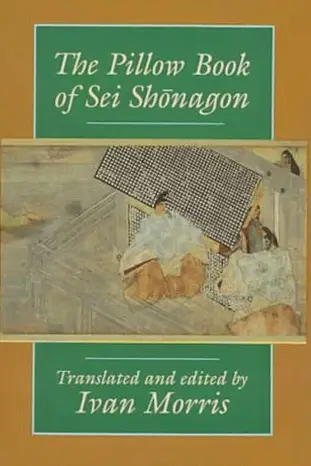
It’s time to go back centuries and find some wisdom in imperial times. And what better book on creativity than The Pillow Book. It was written by Sei Shōnagon over a thousand years ago in Heian-era Japan. Shōnagon was a court lady to Empress Teishi and kept a notebook of observations, poetry, gossip, etc.
The book features fascinating lists. It has sections like “Things That Make the Heart Beat Faster,” “Things That Annoy,” or “Elegant Things”, among others. Basically, these are observations about status and social behavior in imperial Japan.
But you must be wondering how it can be relevant today?
Well, Shōnagon captures passing thoughts before they disappear. In many ways, it resembles modern journaling or note-taking. And makes it one of the best books about creative thinking, as how careful observation can itself become artistic practice.
Want to explore more about imperial and modern Japan? Check out these Japanese books and Japanese movies.
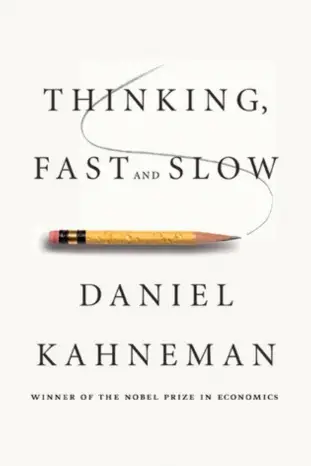
Thinking, Fast and Slow is another psychology book on creativity and how human thinking works. It introduces two systems. System 1, which is fast, automatic, intuitive, and emotional, and System 2, which is slower, deliberate, and analytical.
Now, System 1 generates raw ideas, associations, and intuitive connections, while System 2 evaluates, edits, and structures them. These ideas connect directly to the creative output as an interaction between intuition and control.
But be mindful that when System 1 is suppressed, ideas can become rigid. When System 2 is underused, ideas can remain chaotic. So, creativity is in balancing rather than relying on only one way of thinking.
With thousands of reviews on Goodreads, the book remains one of the best books about creative thinking.
One conclusion that I can draw from our discussion of books on creativity is that creativity is a shift in how we organize and construct our attention. When the mind stops judging everything immediately, thoughts connect more freely. Here, what matters most is not the method, but the mind that can hold experience.
This changes the usual assumption that creativity is something to produce. Instead, it becomes a condition that happens when we are not thinking about creativity in terms of speed and efficiency.
They explore how ideas form, develop, and evolve through attention, habits, and perspective. Creativity is shown as a process, not just inspiration.
They help you understand thinking patterns, remove mental blocks, and improve idea generation. Many also show how to apply creativity in daily work.
They focus on how creative work actually happens step by step, from idea formation to execution. The emphasis is on practice and repetition.
Yes, they break creativity into simple, learnable actions rather than abstract talent. This makes starting easier and less intimidating.
Yes, they train observation, association, and flexible thinking over time. This improves both problem-solving and idea development.
Do you want global book, music, and movie recommendations straight to your inbox?
Sign up for the newsletter below!

Whenever you read a travel book, you always read through the writer’s perspective. And this point makes sense because, let’s say, what will happen if

When most people think of Latin American literature, magical realism always comes to mind and that makes sense. Writers like Gabriel García Márquez from Colombia,
When I wrote about the best Argentinian movies, I discussed how countries that live under military dictatorships often turn to art to process trauma and